Head Quarters
Mbamba Bay Katumbi Street, Plot No. 24
P.O.Box 90 Nyasa, Ruvuma, Tanzania
******************************************
Songwe Sub-Office:
Tunduma, P.O. Box 159, Momba – Tanzania

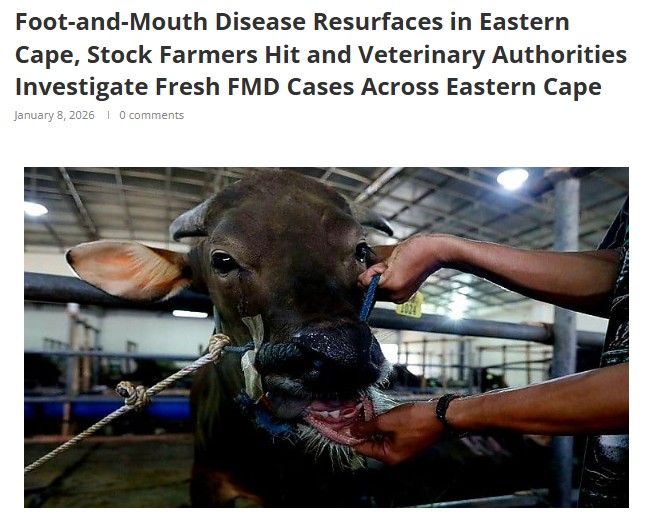
Foot-and-mouth disease (FMD) has resurfaced in South Africa’s Eastern Cape Province, affecting livestock farmers and prompting urgent veterinary response measures. Reports confirm a recent case within the Amahlathi Local Municipality area, and ongoing investigations are being conducted into additional suspected outbreaks in nearby districts. To reduce the spread, authorities have advised a halt to the movement of cloven-hoofed animals (cattle, sheep, goats, and pigs) across the province until January 23, 2026, while surveillance, testing, and vaccination activities continue. ( https://centralnews.co.za/foot-and-mouth-disease-resurfaces-in-eastern-cape-stock-farmers-hit-and-veterinary-authorities-investigate-fresh-fmd-cases-across-eastern-cape/?utm_source=chatgpt.com )
Why this matters for Tanzania and East Africa
This outbreak is not just a South Africa story—it’s a regional reminder. Evidence from Tanzania shows how FMD viruses can circulate across borders and persist over decades. A landmark molecular study analysing FMD viruses collected in Tanzania between 1967 and 2009 found four circulating serotypes (O, A, SAT 1, SAT 2) across multiple regions. Importantly, the viruses were genetically related to lineages found in the wider East African region—supporting the idea that animal movement (trade, pastoral mobility, and informal routes) can drive virus dispersal across countries. The same study highlights a key operational challenge: multiple serotypes complicate vaccination, because vaccine selection works best when countries routinely update knowledge of what strains/topotypes are circulating. https://doi.org/10.1111/tbed.12200 / https://hdl.handle.net/10520/EJC122509
One Health action points (practical takeaways) : To strengthen preparedness at the community, district, and border levels, we recommend
Share This News