
Head Quarters
Mbamba Bay Katumbi Street, Plot No. 24
P.O.Box 90 Nyasa, Ruvuma, Tanzania
******************************************
Songwe Sub-Office:
Tunduma, P.O. Box 159, Momba – Tanzania

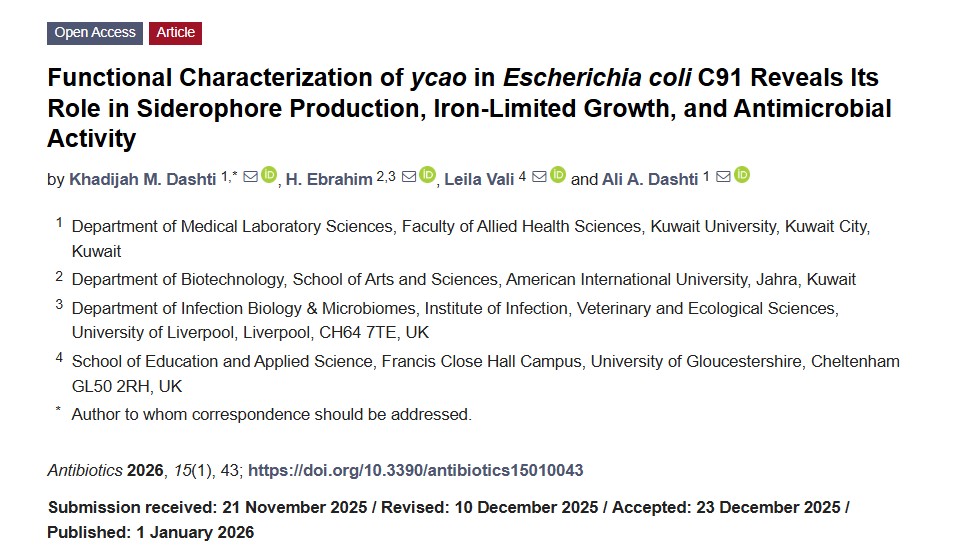
A newly published study has revealed that Escherichia coli, a bacterium commonly associated with human infections, possesses previously hidden potential to produce antimicrobial compounds. Using ribosome-engineering techniques, researchers activated silent biosynthetic gene clusters within E. coli C91, leading to the discovery of antibacterial activity against Staphylococcus aureus.
One mutant strain (C91-R1) produced unique metabolites not found in the wild type, including a novel compound detected through LC-MS/MS analysis. The study also demonstrated that the ycaO gene plays a critical role in siderophore production and bacterial growth under iron-limited conditions—key processes linked to antimicrobial activity.
Genome-mining tools further identified non-ribosomal peptide, thiopeptide, and polyketide biosynthetic pathways, reinforcing the organism’s antibiotic-producing capacity.
These findings highlight a promising strategy in the fight against antimicrobial resistance: unlocking dormant genetic capabilities in well-known bacteria, rather than relying solely on the discovery of new species. The study contributes valuable insight toward next-generation antibiotic discovery and antimicrobial stewardship.
***********************************************************************************************************************************
Citation :
Dashti KM, Ebrahim H, Vali L, et al.
Functional characterization of ycaO in Escherichia coli C91 reveals its role in siderophore production, iron-limited growth, and antimicrobial activity.
Antibiotics. 2026;15(1):43.
https://doi.org/10.3390/antibiotics15010043



Share This News